


Follow Jeff here https://www.youtube.com/@JeffGeerling been following his journey with arm computing for years
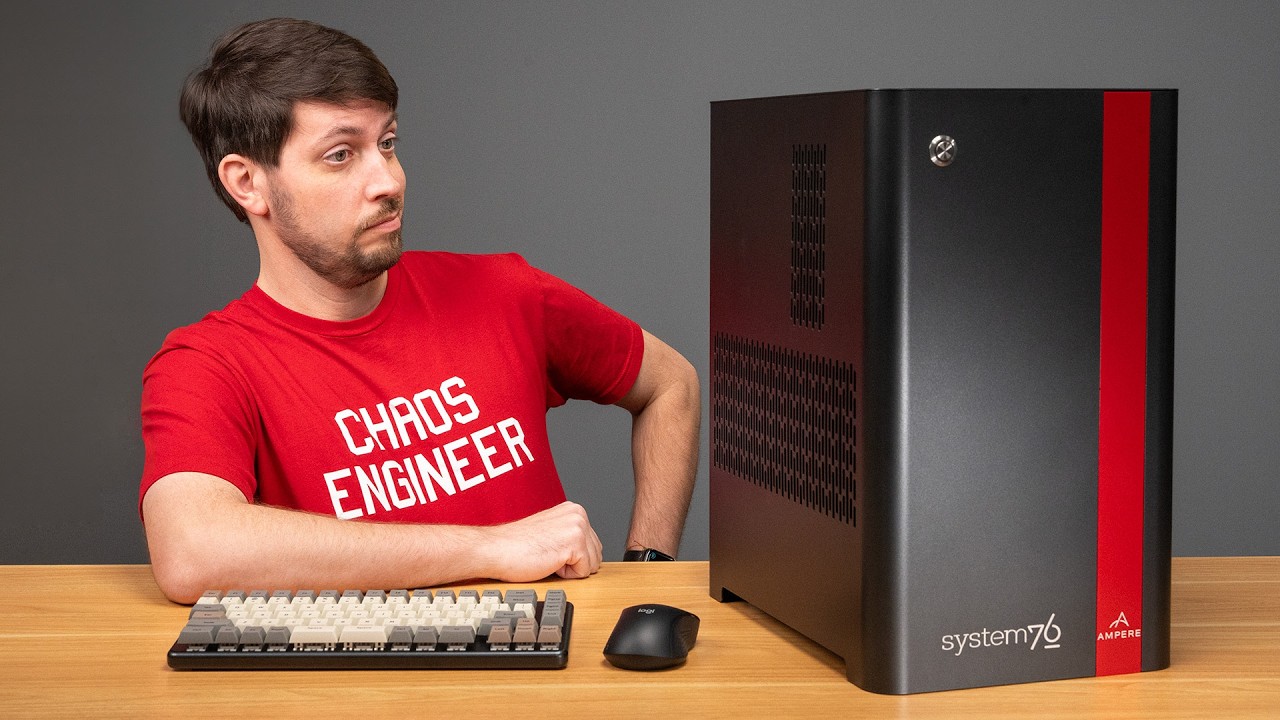
System76 Thelio Astra and the Power of Ampere Altra Max
(128-Core ARM Workstation)
The System76 Thelio Astra represents a new direction in desktop computing: bringing server-class ARM performance into a developer-friendly workstation. Powered by the Ampere Altra Max M128-30, this system pushes the limits of parallel computing while maintaining high energy efficiency.
At its core, the Altra Max M128-30 features 128 ARM cores running up to 3.0 GHz, designed for massively parallel workloads rather than traditional single-core speed. Ampere Computing built this processor specifically for cloud-native and scalable applications, and the Thelio Astra adapts that power into a quiet, desktop form factor.
Benefits of ARM Architecture
The biggest advantage of ARM in this context is efficiency and scalability. Compared to traditional x86 processors:
Lower power consumption: ARM CPUs deliver strong performance per watt, making systems like the Thelio Astra more energy-efficient.
High core density: 128 cores allow thousands of threads to run simultaneously, ideal for modern distributed workloads.
Reduced heat and noise: Even with a server-class CPU, the system can run quietly and efficiently in a desktop environment.
Native ARM development: Developers can build and test software directly on ARM hardware instead of relying on emulation, avoiding performance bottlenecks and compatibility issues.
This architecture is particularly aligned with how modern software is evolving—toward microservices, containers, and parallel processing.
What the Altra Max M128-30 Is Best Used For
The 128-core design is not meant for everyday desktop use or gaming. Instead, it excels in highly parallel workloads, including:
Cloud-native and backend development
Running containers, Kubernetes clusters, and large-scale server simulations is where this CPU shines.
ARM software development and testing
Especially important for industries like automotive, where ARM-based systems are widely used in embedded hardware.
AI inference and machine learning pipelines
The CPU performs well in frameworks optimized for ARM, particularly when workloads scale across many cores.
Rendering and scientific computing
Benchmarks show extremely strong multi-threaded performance, outperforming many traditional CPUs in parallel tasks.
DevOps and virtualization
Running many virtual machines or services simultaneously is a natural fit for this architecture.
Limitations to Consider
Despite its strengths, the Altra Max M128-30 is not ideal for everything:
Weaker single-core performance compared to high-end x86 CPUs
Software compatibility can still be an issue if applications are not compiled for ARM
Specialized use case—overkill for general users or typical desktop workloads
Conclusion
The System76 Thelio Astra with Ampere Altra Max M128-30 represents a shift toward ARM-based high-performance desktops. Its strength lies in massive parallelism, efficiency, and native ARM development capabilities. While not suited for casual use, it is a powerful tool for developers, engineers, and researchers working in modern, scalable computing environment


Leave a Reply
You must be logged in to post a comment.